Problem: You Cannot Find Where the Water Is Actually Entering
Commercial roofs are layered systems. Water that drips onto a desk on the second floor may have entered the roof membrane forty feet away, run along a seam, pooled at a low spot, and finally found a fastener hole or a deck gap above the ceiling. Property managers often chase the stain instead of the source, which wastes time and money.
Solution: Methodical Origin Tracing Before Any Patch
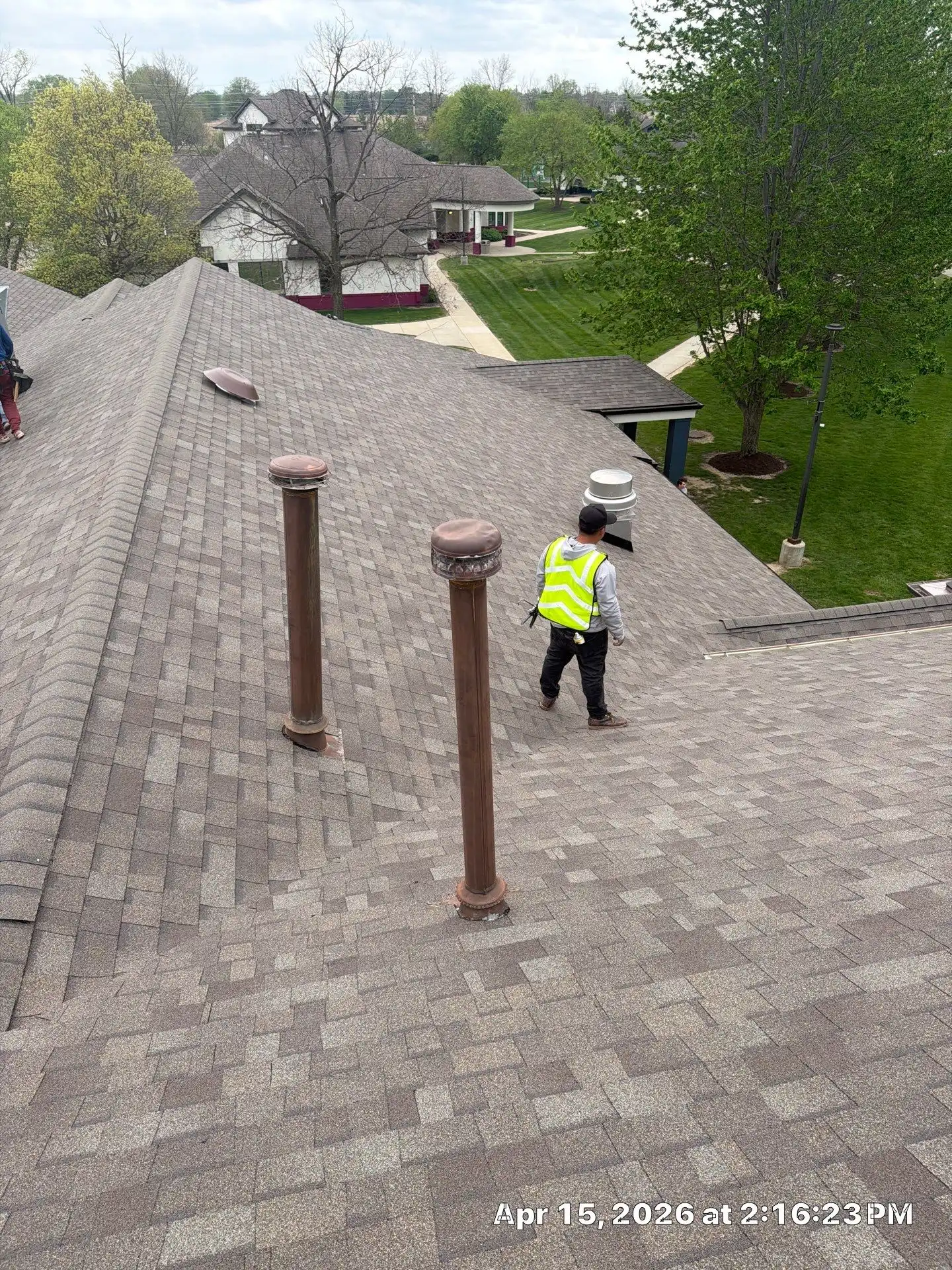
We start at the interior stain and work outward, then move to the roof and read the membrane like a map. Seams, penetrations, drains, and parapet flashings get inspected in that order because that is where most leaks live. Infrared scanning and moisture meters help confirm the entry point on larger roofs. If you want more detail on this step, our guide on roof leak origin detection versus repair explains why finding the source matters more than the patch itself.
On TPO and EPDM roofs, we pay close attention to seam welds and lap edges where age and thermal cycling open hairline gaps. On modified bitumen and built up systems, the usual suspects are blistered cap sheets, split laps, and corroded metal flashings at the wall transitions. Each membrane type fails in predictable ways, and knowing those patterns shortens the search considerably.
Problem: The Leak Is Active and Your Operations Cannot Stop
A retail tenant cannot close the store. A warehouse cannot move pallets out of the rain zone fast enough. A medical office has equipment that cannot be exposed to moisture. You need the water stopped now, not after a full repair cycle.
Solution: Staged Dry-In With Weather-Aware Scheduling
We monitor forecasts during active repair jobs and stage materials so the roof is never left open overnight when storms are likely. If conditions change mid project, we re tarp and resume when the weather clears. This is not glamorous work, but it is the difference between a clean repair and a claim that doubles in size.
Problem: Weather Is Moving In and You Have an Open Roof
Downtown Indianapolis storms can stack up quickly in spring and summer. An exposed deck or torn membrane before a front arrives turns a manageable repair into an interior flood.
Problem: You Do Not Know If This Is a Repair or a Replacement
Patching a roof that has five good years left makes sense. Patching a roof that is failing across the entire field is throwing money away. The decision is rarely obvious from the ground.
Solution: Treat the System, Not the Symptom
Repeat leaks at the same location almost always trace back to one of three causes. We work through them in order:
- Ponding water from inadequate slope or clogged drains, which defeats any patch over time.
- Failed flashing at a parapet, curb, or penetration that was sealed cosmetically instead of reflashed.
- Wet insulation underneath that keeps the deck saturated and pushes moisture through new seams.
Fixing the root cause may cost more upfront than another patch, but it ends the cycle. For buildings approaching the end of their roof life, a planned re cover is almost always cheaper per year than chasing recurring leaks.
Problem: The Same Spot Keeps Leaking After Every Storm
You have paid for repairs twice already. After the next thunderstorm, the stain reappears in the same ceiling tile. This pattern usually points to a deeper issue than the previous patch addressed.
Solution: Honest Condition Assessment Tied to Cost
We give you a candid read on remaining service life based on membrane condition, seam integrity, insulation saturation, and drainage performance. A roof with isolated failures and dry insulation cores is almost always worth repairing. A roof with widespread seam fatigue, brittle membrane, or saturated insulation across multiple bays is usually a re cover or replacement conversation, even if only one spot is leaking today.
We also factor in your business horizon. If you own the building and plan to hold it for ten or more years, investing in a new system pays back through energy savings and ended leak calls. If you lease and have three years left on the term, targeted repairs that carry the roof through the lease are the smarter spend. Downtown Indianapolis Commercial Roofing writes the assessment in plain language so you can share it with ownership, finance, or insurance without translation.
Solution: Documentation Built Into Every Inspection
Downtown Indianapolis Commercial Roofing produces a written report for every commercial leak call in Downtown Indianapolis, including dated photos of the entry point, interior damage, and any contributing roof conditions. We note the membrane type, age estimate, and the specific failure mode so your adjuster has what they need on the first review. When carriers ask for a scope of repair, we provide line item pricing that matches industry standards, which speeds approval and gets your building back to dry, secure, and operational without unnecessary back and forth.
Problem: Your Insurance Carrier Wants Documentation You Do Not Have
After a hail event or wind storm, carriers expect photographs, moisture readings, and a clear narrative tying the damage to the loss date. Without that paperwork, claims get reduced or denied, and the repair cost shifts back to your operating budget.
Solution: Tarping and Dry-In as the First Priority
For active leaks, we prioritize getting the opening covered before anything else. That usually means a reinforced tarp mechanically fastened over the suspected entry zone, with edges sealed against wind uplift. This is a temporary measure, but it buys the days needed to dry the interior, coordinate with your insurance, and plan the permanent repair. Interior water that has already reached drywall, ceiling tile, or insulation gets handled in parallel by our commercial water damage restoration team so the building can keep operating where possible.
When you call Downtown Indianapolis Commercial Roofing, we assess severity over the phone first. That conversation tells us whether you need an inspection visit scheduled fast or whether an emergency dry in crew needs to head out with tarps and fasteners right away. We also walk you through immediate steps you can take to protect inventory and equipment while we are en route, including where to place containment and which circuits to de energize if water is near electrical.